Driving to Tahoe in Winter: A Mechanic's Pre-Trip Checklist, Chain Controls and What to Pack
Before driving to Tahoe in winter, have a shop check your battery, tires, brakes, coolant, heater and wipers. Carry chains or cables that fit your tires, even if you drive an AWD car. Pack a basic emergency kit, fill the tank, and check Caltrans QuickMap before you leave San Francisco. That covers most of what goes wrong on the way up.
Thanksgiving is the big test. AAA projected a record 81.8 million Thanksgiving travelers in 2025, and nearly 90% of them went by car. If you're joining them on I-80 or US-50 this year, here's how I'd get your car ready.
When should you book a pre-trip check before Thanksgiving?
Book a pre-trip inspection about two to three weeks before you leave. For Thanksgiving on November 26, 2026, that means calling by around November 9. The check itself should happen one to two weeks out, so there's time to order tires, a battery or chains if your car needs them.
Tires in less common sizes can take a few days to arrive, and the week before a holiday is busy for every shop. Here's the timeline we suggest:
| When | What to do |
|---|---|
| 2 to 3 weeks before (by about Nov 9) | Book a pre-trip inspection. Order tires, chains or a battery if the check turns up a problem. |
| 1 to 2 weeks before (about Nov 12 to 19) | Get the inspection done and finish any repairs. |
| 1 week before | Practice putting your chains on at home. Swap in winter washer fluid. |
| Night before | Check tire pressure while the tires are cold, fill the tank and pack the kit. |
| Morning of | Check the forecast and chain controls on QuickMap. |
The mechanic's pre-trip inspection checklist
Here's our pre road trip car inspection checklist for the Sierra. The CHP's winter driving tips list brakes, wipers, defroster, heater, exhaust, antifreeze and tires. We check those, plus the battery and the 4WD or AWD system.
| System | What we check | Why it matters in the Sierra |
|---|---|---|
| Battery | Load test, terminals, cables | Cold cuts cranking power. A battery that limps along in SF can fail on a frozen morning in Truckee. |
| Tires | Tread depth, pressure, sidewall damage, M+S marking, spare | Tires do all the gripping, and chains have to fit them. |
| Brakes | Pads, rotors, brake fluid | Long descents from Donner and Echo Summit build a lot of heat. |
| Coolant (antifreeze) | Freeze protection, leaks, hoses | Mountain nights often drop below freezing. Weak coolant can freeze in the engine. |
| Heater and defroster | Airflow, heat output, rear defroster | You need both to keep the windshield clear in snow. |
| Wipers and washer fluid | Blade condition, winter-rated fluid | Summer fluid isn't made for freezing temperatures. |
| Lights | Headlights, brake lights, signals | Snow and early sunsets cut visibility. |
| Belts, hoses and fluids | Oil, transmission, transfer case and differentials | Cold makes old rubber crack and slow fluids work harder. |
| 4WD or AWD system | Engages properly, no warning lights | The R-2 exemption only helps if all four wheels actually drive. |
| Exhaust | Leaks, damage | Matters if you sit idling in stopped traffic or snow. |
A few rows deserve more detail. If your car has had slow starts, a battery load test takes minutes and tells you how much capacity is left. Our post on the signs a battery is dying covers what to watch for. For coolant, we test freeze protection with a refractometer and look for leaks during a cooling system check.
If the defroster is weak, fix it before the trip. Our guide to a car heater blowing cold air explains the usual causes.
What does it cost? At Bay Area independent shops, a pre-trip or winter inspection is often included when you're already in for an oil change or other service, and usually runs up to about $150 on its own. Exact cost depends on the car; you'll get a quote before we start.
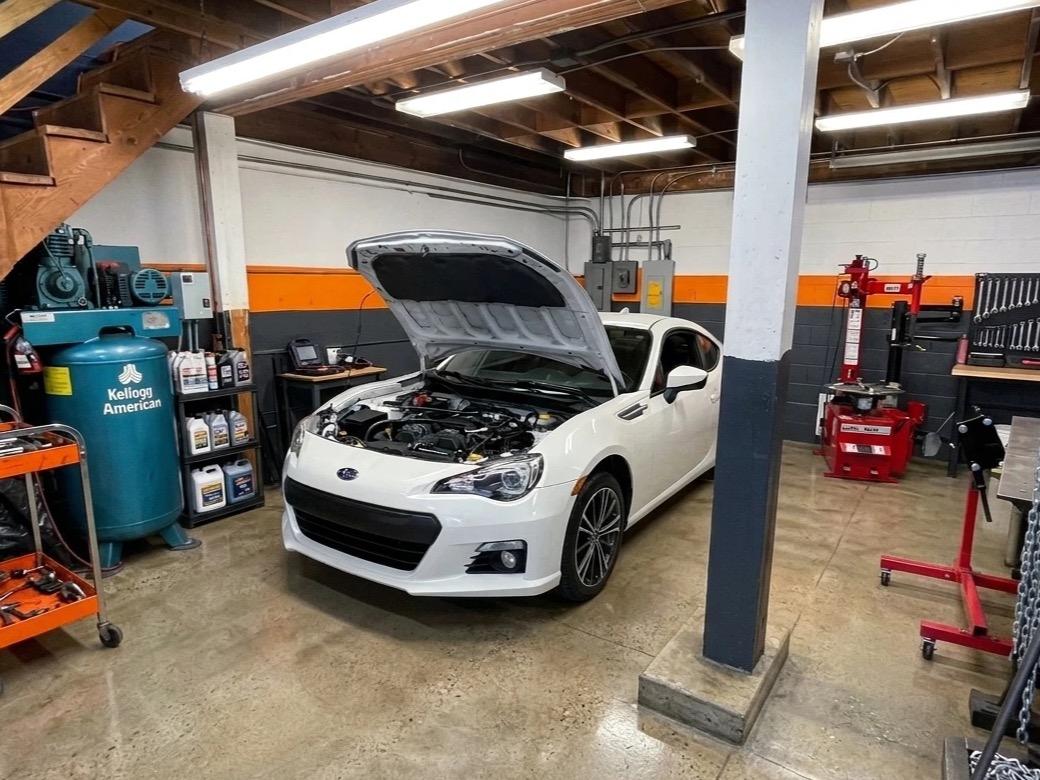
Tires for Sierra snow: M+S, snowflake tires, tread and pressure
For Tahoe, you want tires with plenty of tread and the right marking on the sidewall. Caltrans counts tires marked MS, M/S, M+S or "MUD AND SNOW" as snow-tread tires for chain controls. A three-peak mountain snowflake tire has passed a snow traction test, which M+S tires don't have to do.
M+S. Most all-season tires carry this marking. It matters because it's what Caltrans uses in its R-1 and R-2 rules. As Continental notes, the performance of M+S tires isn't defined or measured by a standard test.
Three-peak mountain snowflake. Tires with this symbol passed a standardized test on medium-packed snow. They grip much better in real snow. Caltrans's chain-control page doesn't mention the symbol, though, so don't count on it to change what the signs require.
Tread. Worn tires lose snow grip fast. Our rule of thumb for a mountain trip is to have tread well above the legal minimum. If your tires are close to worn out, a winter tire check and replacement before the trip is worth it.
Pressure. Michelin says tires lose about 1 psi for every 10°F drop in temperature. Tires set on a 60°F day in SF can read 4 psi low on a 20°F morning in Truckee. Set them to the number on the driver's door jamb, then recheck cold at the cabin.
Rentals. If you're renting, check the tires before you leave the lot. Ask whether chains come with the car, and if not, bring your own.
Caltrans chain controls explained: R-1, R-2 and R-3
Chain controls on I-80 and around Tahoe come in three levels. At R-1 and R-2, some cars with snow tires can skip chains. At R-3, every vehicle chains up. Caltrans says R-1 and R-2 are the most common, and "a highway will often be closed before an R-3 condition is imposed."
Here's how Caltrans defines each level:
| Level | What Caltrans says |
|---|---|
| R-1 | "Chains are required on all vehicles except passenger vehicles and light-duty trucks under 6,000 pounds gross weight and equipped with snow tires on at least two drive wheels." |
| R-2 | "Chains or traction devices are required on all vehicles except four-wheel/all-wheel drive vehicles with snow-tread tires on all four wheels." |
| R-3 | "Chains or traction devices are required on all vehicles, no exceptions." |
A few more rules from the same page:
- Speed: "The speed limit when chains are required is 25 or 30 miles an hour." Watch for the posted number.
- Trailers: "All vehicles towing trailers must have chains on one drive axle."
- Enforcement: The CHP says you must stop and chain up when signs require it. If you don't, you "can be cited by the California Highway Patrol and fined."
- Taking them off: Drive past the "End of Chain Control" sign to a pull-off area before you remove them.
Chain controls change hour to hour, so I won't guess at conditions. Check the current status before you go (more on that below).
Do you need chains with AWD or 4WD in California?
Yes, you need to carry them. Caltrans says "four-wheel/all-wheel drive vehicles must carry traction devices in chain control areas." You can skip putting them on only at R-2, and only if all four tires are snow-tread tires. At R-3, AWD and 4WD cars chain up like everyone else.
This is the rule I see blurred most often. "I have AWD, so I'm fine" isn't true at a checkpoint, and it isn't true on ice. AWD helps you get moving because it sends power to all four wheels. It doesn't help you stop or turn. Your brakes and tires do that, and they work the same on an AWD car as on any other.
Choosing and fitting chains or cables
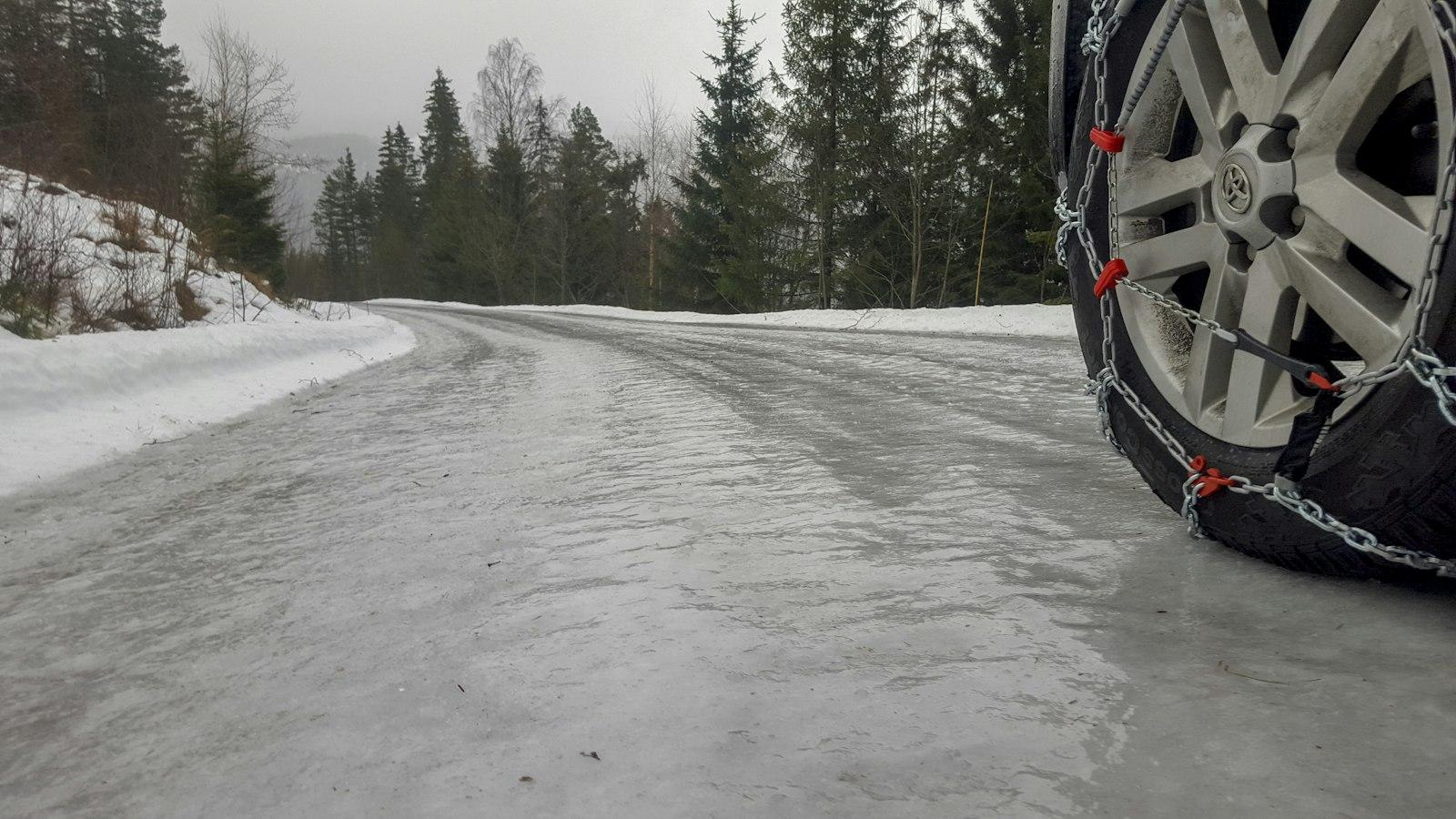
Buy chains or cables that match the size printed on your tire sidewall, for example 225/65R17. Then check your owner's manual. Some manuals limit which devices you can use, or call for low-clearance ones (often listed as SAE Class S). This comes up a lot on AWD crossovers and cars with low-profile tires, where there's little room in the wheel well.
Practice once at home in SF, on a dry day, before you need to do it in slush. It's much easier to learn on a quiet, flat street or in a garage than at a pull-out with trucks going by.
You can pay a chain installer at the chain-up areas. Caltrans notes they are "NOT allowed to sell or rent chains," so bring your own. Get a receipt and write the installer's badge number on it.
What to pack for a winter drive to Tahoe
Caltrans and the CHP both publish packing lists. Here's a combined version with a few extras we'd add, split into what the car needs and what the people need.
Car kit
- Chains or cables that fit, plus repair links
- Gloves and a mat or kneepad for chaining up
- Flashlight
- Ice scraper and a brush or broom
- Small shovel
- Sand or burlap for traction
- Jumper cables or a jump pack
- Towel
- An extra car key
People kit
- Water and food
- Blankets and extra warm clothes
- Phone charger
Caltrans says to keep your gas tank full. That gives you room to wait out a closure or take a longer route. It also keeps the heater running if you're stuck in traffic.
I-80 or US-50? Checking conditions before you leave SF
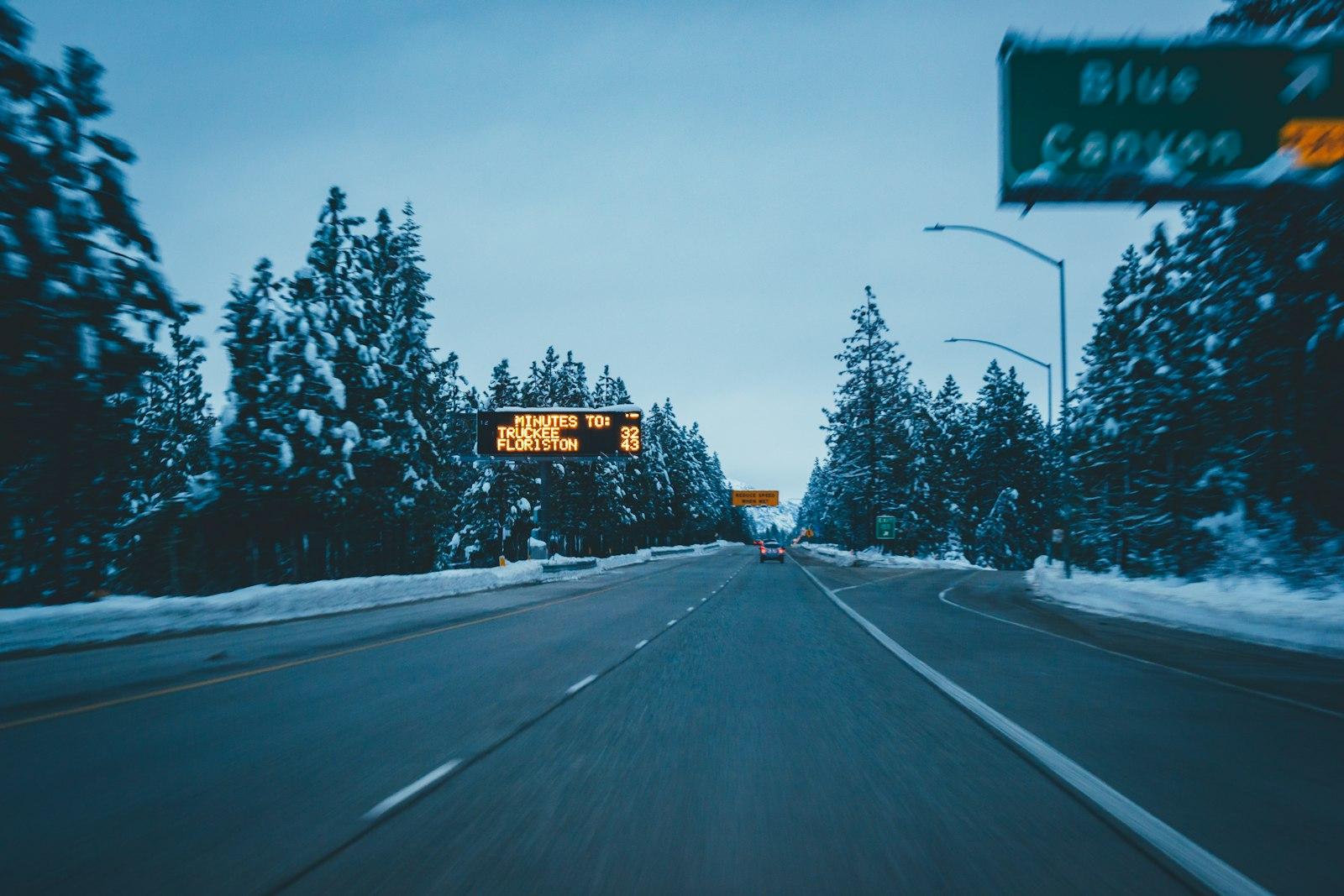
Most SF drivers take I-80 over Donner Summit to Truckee and the North Shore, or US-50 over Echo Summit to South Lake Tahoe. Both cross the Sierra crest and both get chain controls in storms. Check Caltrans QuickMap or call the Caltrans road information line at 1-800-427-7623 before you leave.
Storms and holiday traffic often overlap. In past Thanksgiving storms, Caltrans has warned drivers to expect chain controls on I-80 and US-50 from Tuesday afternoon through Thursday (2019 example).
Traffic is its own problem. AAA's 2025 forecast named Tuesday and Wednesday afternoons before Thanksgiving as the worst times to drive, and suggested leaving before 11 a.m. on Wednesday. If a map app offers a shortcut over a smaller mountain road in a storm, I'd stay on the main highway.
Driving the descents: protect your brakes
Long downhill grades heat your brakes far more than SF hills do. Shift into a lower gear (L, B or manual mode) so the engine helps slow the car. Brake firmly in short bursts instead of riding the pedal the whole way down.
Hybrids and EVs slow down with regenerative braking, which helps on descents. They still use the friction brakes, so they still need a brake inspection before mountain driving. If you're unsure how much pad life you have left, our post on how long brake pads last explains what we measure.
Back in SF: what to check after a snow trip
Once you're home, rinse the underside of the car and the wheel wells to get the road grime and slush off. Look behind each wheel for anything a chain may have hit: scraped plastic liners, loose wires or a bent brake line.
If the car pulls to one side or the steering wheel sits crooked after rutted roads, book an alignment check. Look over your tires for uneven wear, and top off the washer fluid, since you'll have used plenty.
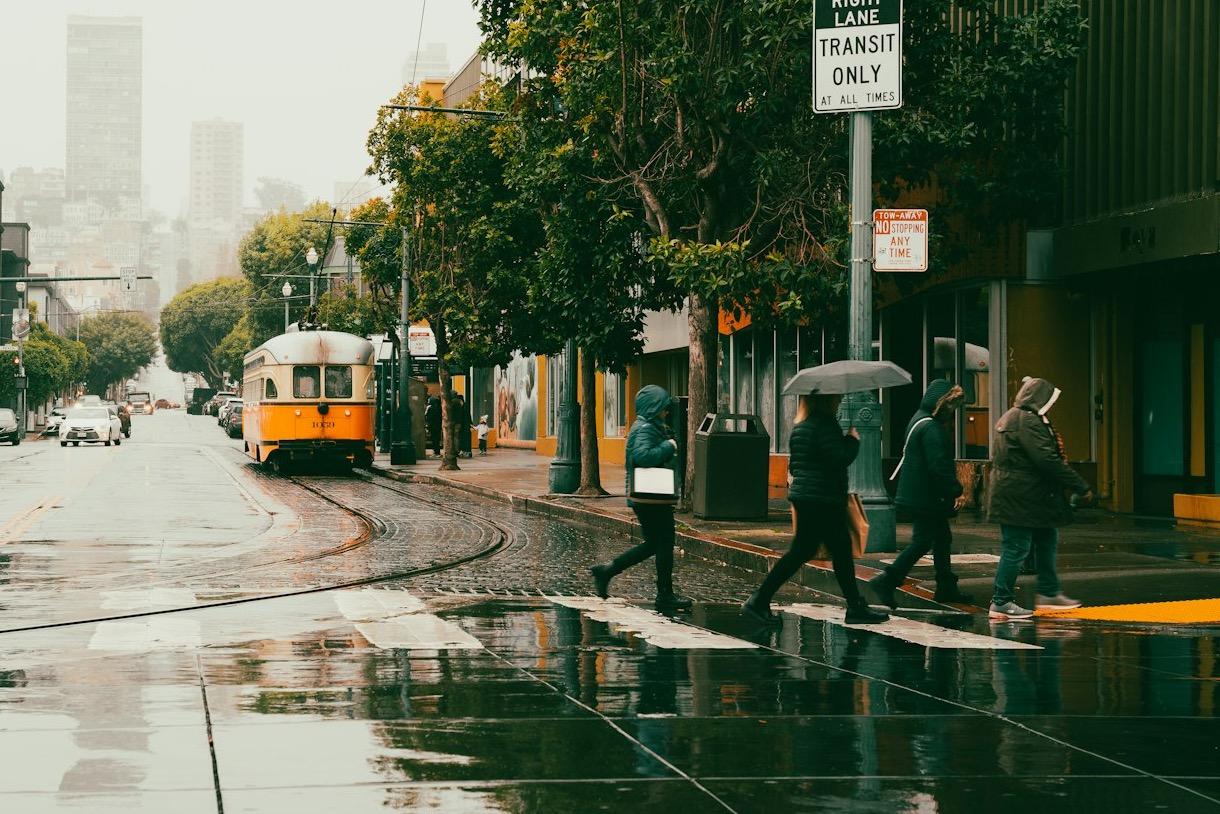
The rain doesn't stop when you get back, so it's a good time to run through our SF rainy season car checklist too.
A little prep goes a long way. Get the car checked a week or two early, carry chains that fit, and check QuickMap before you go. Then the drive up becomes the easy part of the trip.
Frequently Asked Questions
Do I need chains if I have AWD in California?
You need to carry them. Caltrans requires four-wheel and all-wheel drive vehicles to carry traction devices in chain control areas. You can leave them off at R-2 only if all four tires are snow-tread tires, and at R-3 every vehicle must chain up.
What's the difference between R-1 and R-2 chain control?
At R-1, passenger cars and light trucks under 6,000 pounds can skip chains if they have snow tires on at least two drive wheels. At R-2, only 4WD and AWD vehicles with snow-tread tires on all four wheels are exempt. Everyone else chains up.
Can I buy or rent chains from the installers on I-80?
No. Caltrans says chain installers at the chain-up areas are not allowed to sell or rent chains. Buy chains that fit before you leave and bring them with you. Get a receipt and note the installer's badge number on it.
How fast can I drive with chains on?
Caltrans sets the speed limit at 25 or 30 mph when chains are required, so follow the posted sign. Take them off only after you pass the End of Chain Control sign.
What should I get checked before driving to Tahoe?
Have a shop check the battery, tires, brakes, coolant freeze protection, heater and defroster, wipers and lights. On 4WD and AWD cars, check the system works and the fluids are good. Book it one to two weeks before you leave so there's time for parts.
Andy Morales
Owner & ASE-Certified Master Technician, 415 Mechanix
Andy has worked on cars for more than 20 years and founded 415 Mechanix in Potrero Hill in 2018. He's an ASE-certified Master Technician who would rather explain a repair than upsell one.
Need Preventative Maintenance?
Book online or call us. We're on 25th Street in Potrero Hill, and we explain every repair and quote it before we start.
Learn about our preventative maintenance service →