Is Parking on a Hill Bad for Your Car? What San Francisco Hills Really Wear Out
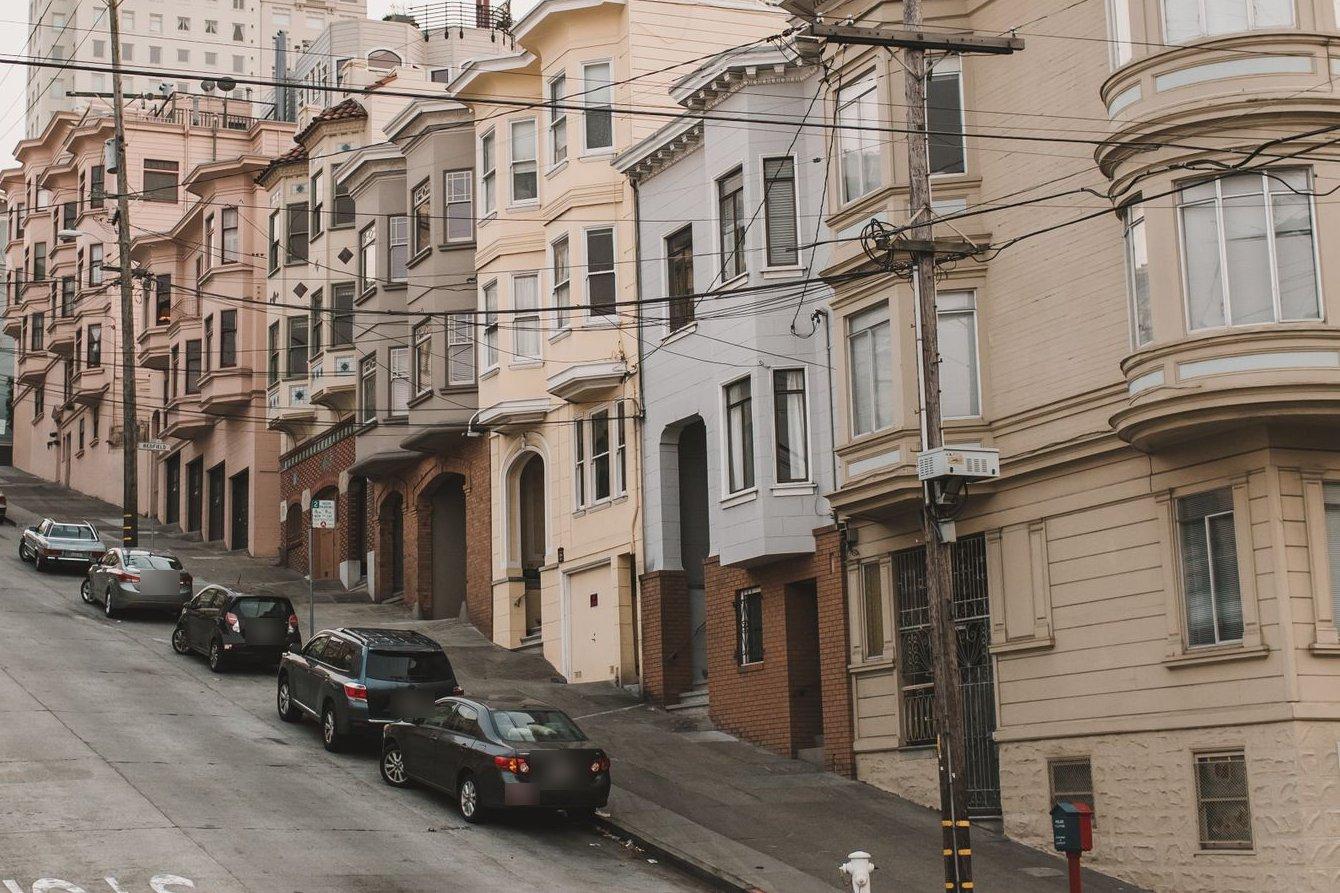
Is parking on a hill bad for your car? Not if you do it in the right order. Set the parking brake before you shift into Park, and curb your wheels. The damage comes from letting a small pin in the transmission, the parking pawl, hold the car's weight day after day. Driving San Francisco's hills is a separate story: it mainly speeds up wear on brakes, the parking brake, clutches, suspension and front tires.
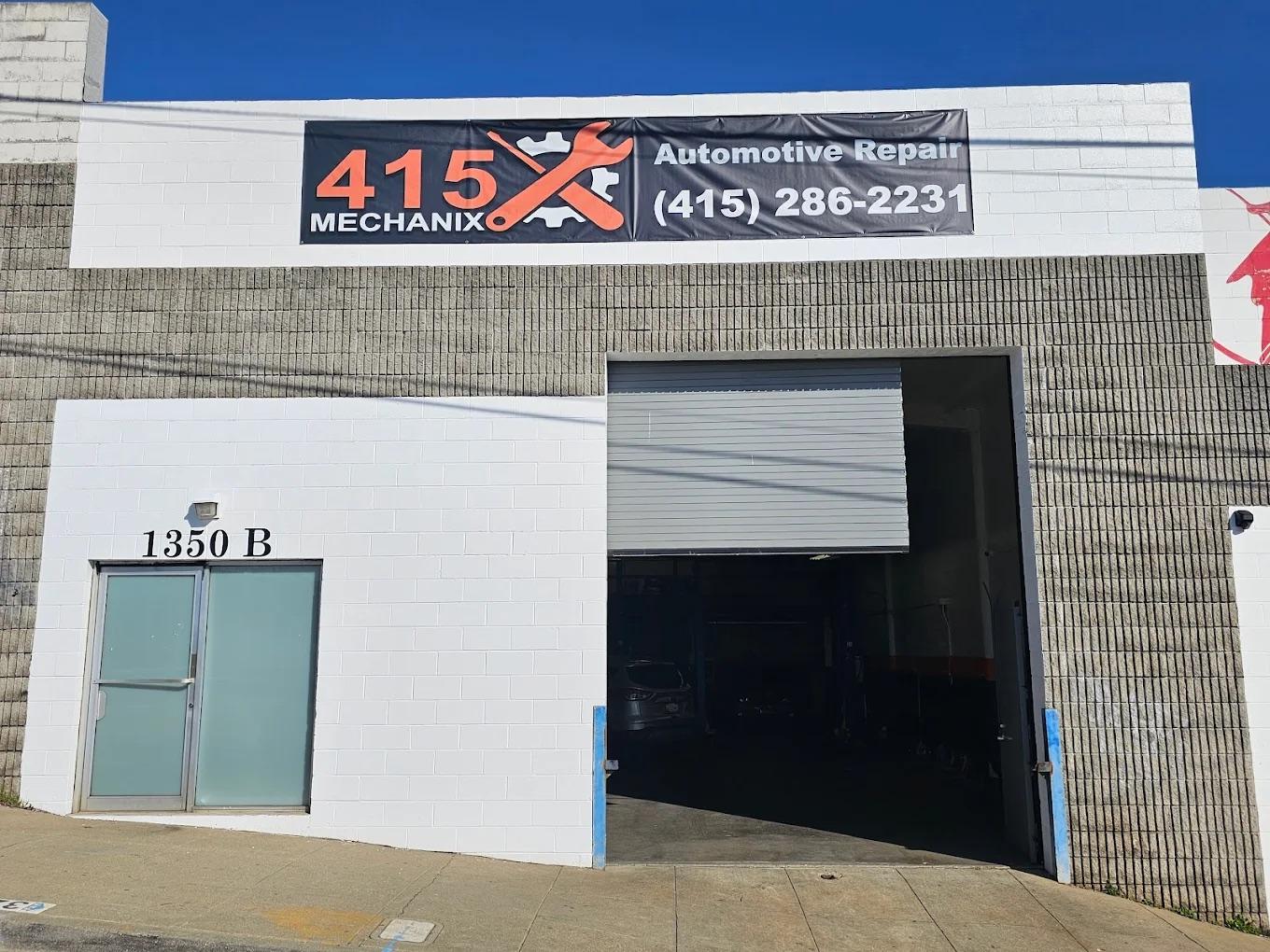
I'm Andy Morales, an ASE-certified Master Technician, and our shop sits on a slope on 25th Street in Potrero Hill. Here's what hills actually wear out, the warning signs, and how to park so those repairs come later.
What actually happens when you park on a hill?
When you shift an automatic into Park, a steel pin called the parking pawl drops into a notched gear inside the transmission. That locks the wheels, and on flat ground it carries almost no load. On a hill, if you release the brake pedal before the parking brake is on, the car rolls an inch or two and its full weight hangs on that pin.
The pawl is built to take that load, so one time won't hurt it. The trouble is repetition: a car parked nose-down on a steep block every night puts that strain on the pawl and the shift linkage hundreds of times a year.
Does parking on a hill damage your transmission?
It can, slowly, if the pawl takes the weight every time. Pawl failures are uncommon, but the pawl, its return spring and the shift cable can wear faster under daily strain. Use the parking brake first and the pawl barely works at all.
Signs the pawl is taking the load
- A loud clunk or jolt when you shift out of Park on a slope
- A shifter that's stiff or hard to pull out of Park until you step harder on the brake
- The car rocks or settles noticeably after you let off the brake pedal
An occasional clunk isn't a failure, just a sign to change your parking routine. A shifter that sticks often, or a car that ever moves while in Park, is a warning sign of wear in the pawl or shift linkage. Don't count on Park alone: set the parking brake and curb your wheels every time.
How to park on an SF hill: parking brake or Park first?
Parking brake first. Keep your foot on the brake pedal, turn your wheels, set the parking brake, then shift into Park. That way the parking brake holds the car and the transmission's parking pawl doesn't. Owner's manuals word it a little differently, but the principle is the same.
Here's the full sequence for an automatic:
- Stop with your foot firmly on the brake pedal.
- Turn the front wheels. Facing downhill: toward the curb. Facing uphill: away from the curb. No curb: toward the edge of the road.
- If there's a curb, ease off the brake slightly and let the car creep until the front tire just touches it.
- Keep your foot on the brake and set the parking brake firmly.
- Shift into Park.
- Release the brake pedal. The car shouldn't move.
When you leave, reverse it: foot on the brake, start the car, shift out of Park, then release the parking brake.
Driving a manual? Same steps, but instead of Park, leave it in gear: first gear facing uphill, reverse facing downhill. Kia's owner's manual, for example, says to firmly engage the parking brake and use first or reverse on a hill.
The wheel directions match the California Driver's Handbook, which also says to let the car roll back a few inches when you're facing uphill so the tire gently touches the curb.
Do you have to curb your wheels in San Francisco?
Yes, on any grade steeper than 3 percent (1.72 degrees). That's what SFMTA's curbing guide says, and it also tells you to set the parking brake. A 3 percent grade is gentle, so plenty of SF blocks qualify. If the street looks even slightly sloped, curb your wheels.
The legal basis is California Vehicle Code §22509, which lets cities require curbed wheels on grades over 3 percent. San Francisco's rule is Transportation Code Section 7.2.35. The fine for failing to curb your wheels is $48, according to the SFMTA fees and fines schedule effective July 1, 2026.
SFMTA's main point is safety. If your car gets hit, or the parking brake or transmission lets go, curbed wheels stop it from rolling into traffic.
Electronic parking brakes and auto-hold
Many newer cars have an electronic parking brake (EPB): a button instead of a lever. Some apply it automatically when you shift into Park. The 2025 Toyota Tacoma manual, for example, says its automatic mode sets the brake when you shift to P. Either way, keep your foot on the brake pedal until the EPB light comes on, and still curb your wheels.
What driving in San Francisco hills wears out first
Hills spread extra work across several parts rather than wearing out just one. This table shows the usual order on the cars we see, the signs to watch for, and Bay Area independent-shop price ranges.
| Part | Why hills wear it | Warning signs | Typical SF range |
|---|---|---|---|
| Front brake pads and rotors | Every descent turns speed into heat | Squeal, grinding, pulsing pedal | Pads and rotors $500-$900 per axle |
| Brake fluid | Repeated heat; fluid absorbs moisture over time | Soft or sinking pedal after a long descent | Flush $120-$220 |
| Parking brake | Used daily, holding the car's full weight | Lever or pedal travels further, car creeps | Adjustment $80-$200; cable or shoes $350-$700 |
| Suspension (struts, shocks, sway-bar links) | Steep driveways, dips at intersections, potholes | Clunks over bumps, bouncing, nose dive when braking | Sway-bar links $150-$400; struts or shocks, pair $800-$2,000 |
| Alignment | Hard curb hits when parking | Car pulls, off-center steering wheel | Four-wheel alignment $150-$250 |
| Tires | Braking and turning loads on the front tires; curb scuffs | Uneven wear, sidewall scrapes | Rotation $40-$100; new tires quoted by size |
| Automatic transmission | Heat from climbing in stop-and-go traffic | Harsh or slipping shifts | Warning sign only |
| Clutch (manuals) | Hill starts, holding the car on the clutch | Slipping, burning smell | Warning sign only |
Estimates only. Every car is different, so we give you a written estimate first. National averages for comparison: RepairPal lists wheel alignment at $186-$273, shock or strut replacement at $1,144-$1,348, stabilizer bar links at $131-$185, parking brake adjustment at $78-$114 and parking brake cable replacement at $378-$473, not adjusted for location.
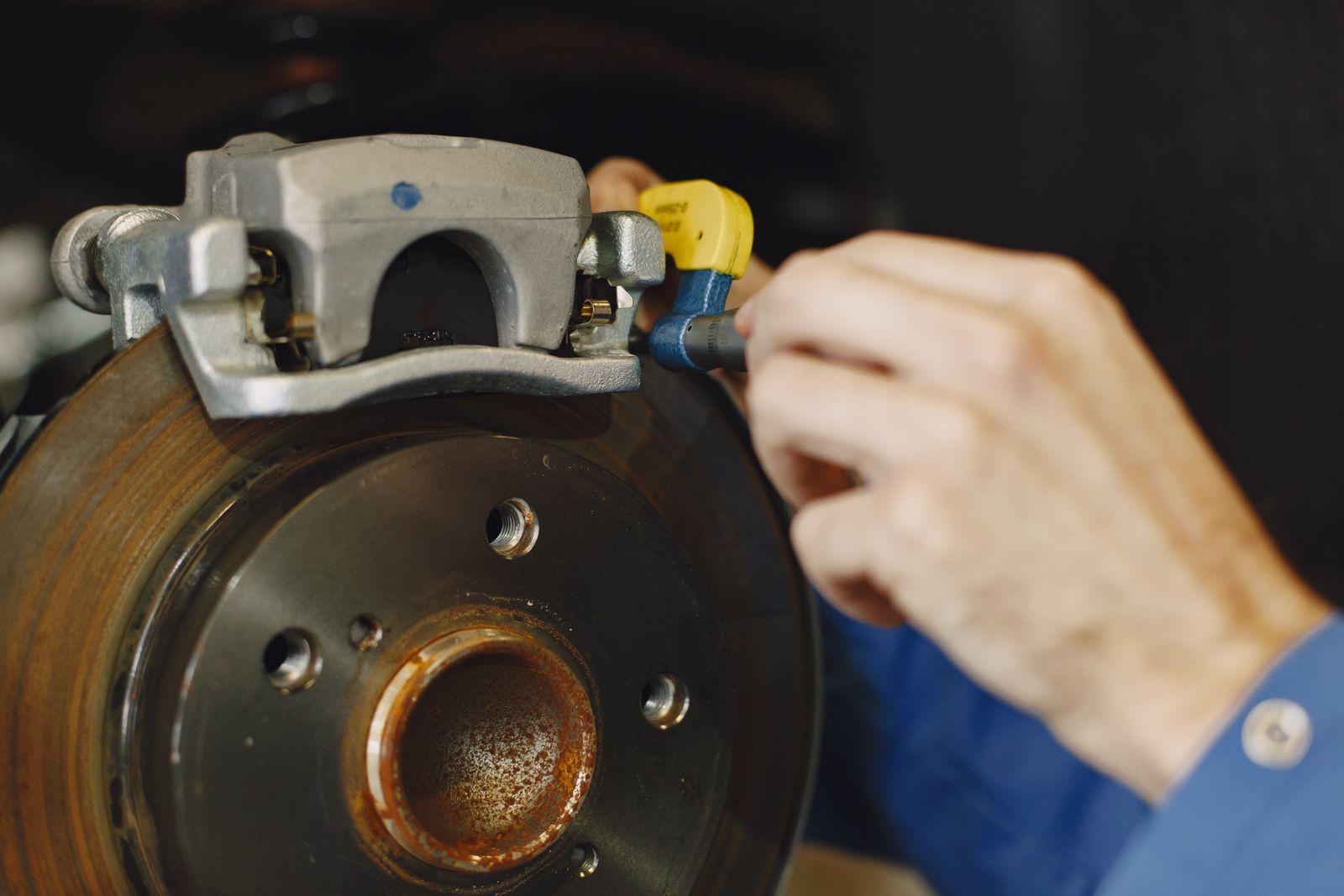
Brakes
Brakes do the most extra work on SF hills. Every time you go down a grade, the pads and rotors turn the car's speed into heat. Add stop-and-go traffic and four-way stops on every corner, and front pads wear well before what a highway commuter would see.
Heat also ages brake fluid. Fluid absorbs moisture over time, which lowers its boiling point. After a long descent, old fluid can boil and leave you with a soft pedal. Flush it on your owner's manual schedule. For pad thickness, symptoms and full costs, see how long brake pads last on SF hills, or book brake repair in San Francisco.
Parking brake
In flatter cities the parking brake barely gets used, but here it holds the car every night. Cable systems stretch, so the lever or pedal travels further before it grips. Many cars with rear disc brakes use small brake shoes inside the rear rotor for the parking brake, and these wear too. Electronic parking brakes usually use a small motor at each rear caliper, and those can fail or throw a warning light.
Watch for a lever that pulls higher than it used to, a car that creeps with the brake set, or an EPB warning light. An adjustment is often all it needs.
Automatic transmission
Climbing hills in heavy traffic makes an automatic transmission work hard, and that work turns into heat, which is what ages transmission fluid. If your driving fits your manual's severe-service conditions (see how often to change oil), fluid changes come sooner.
Never hold an automatic still on a hill with the gas pedal, because, as Kia's manual warns, this can overheat the transmission. Use the brake pedal instead. Shifts that feel harsh, delayed or slippery are the warning signs of a transmission that's running hot or worn.
Clutch (manual cars)
Hill starts are hard on a clutch, and holding the car still on a slope by slipping the clutch is worse. At a light on a steep block, hold the car with the foot brake or parking brake, or let hill-start assist do it if your car has it. A clutch that slips, smells hot or engages higher than it used to is worn.
Suspension, alignment and tires
Steep driveways, dips at cross streets and potholes all load the front control arms, struts and sway-bar links. Clunks over bumps or a floaty, bouncy ride are the usual signs. Our steering and suspension repair covers struts, shocks, links and control arms.
Curbing your wheels is the law, but do it gently. Rolling into the curb hard scuffs sidewalls and can knock the alignment out. If the car pulls or the steering wheel sits off-center after a hard curb hit, get a wheel alignment check. Braking downhill also puts extra load on the front tires, so rotate them on schedule. Our tire service covers rotation, balancing and replacement.
Is driving up steep hills bad for your car?
No, not for a well-maintained car, because the problems come from habits rather than the hill itself. Climb in a steady, lower gear instead of flooring it, use engine braking on the way down, and don't hold the car on the gas or the clutch. Keep the brakes, fluids and cooling system serviced and the hills won't shorten the car's life much.
A few habits that help:
- Going up: keep a steady throttle. If your automatic hunts between gears, a lower gear (L, 2, or S mode) keeps it calmer.
- Going down: shift to a lower gear, or B mode in many hybrids, so the engine helps slow the car. Brake in firm, short applications instead of riding the pedal all the way down.
- Stopped on a hill: hold the car with the brake, never the gas pedal or the clutch.
- Long climbs: they load the cooling system. Keep the coolant fresh and the level right. Our radiator and cooling system service covers it.
Do hybrids and EVs handle SF hills better?
On brakes, yes. Hybrids and EVs use regenerative braking, which slows the car by turning the motor into a generator. The U.S. Department of Energy notes that brake systems on these cars generally last longer because of it. On SF descents, that saves a lot of pad wear.
The catch is that brakes that rarely work hard can stick or corrode, especially the rear calipers in our damp, foggy air. Brake fluid still absorbs moisture, so hybrids and EVs need fluid flushes on schedule too. EVs are also heavy, which adds load on tires and suspension parts on steep streets.
Park them the same way: wheels curbed, parking brake on, then Park.
A simple maintenance plan for hill drivers
You don't need a special schedule, just the schedule in your owner's manual that matches how you drive, plus a few hill checks. Where the table doesn't say "owner's manual", it's our own rule of thumb.
| Item | When we'd check it | Hill-driver adjustment |
|---|---|---|
| Brake inspection | Every oil change | Ask for pad thickness in mm and a parking brake check |
| Brake fluid | Per owner's manual | Don't stretch it; heat and moisture age it |
| Parking brake | At each brake inspection | Adjust if the lever or pedal travels further than before |
| Tire rotation | Per owner's manual | Check sidewalls for curb scuffs |
| Alignment check | Yearly, or after a hard curb or pothole hit | Sooner if the car pulls |
| Transmission fluid | Per owner's manual | Don't hold the car on the gas; heat ages the fluid |
| Coolant | Per owner's manual | Check the level before long climbs or road trips |
If you're not sure which schedule your car is on, our guide to how often to change oil in San Francisco explains normal versus severe service.
The hill-parking routine in one paragraph
Parking on a hill won't hurt your car if the parking brake, not the transmission, holds it. Brake pedal, wheels, parking brake, then Park, every time. Curb gently, keep up with brakes and fluids on the schedule that matches how you drive, and have the parking brake checked at each brake inspection. That's the routine we'd follow on any SF block.
Frequently Asked Questions
Should I use the parking brake every time, even on flat ground?
Yes. Using it daily keeps the cables and rear brake parts moving, so they're less likely to seize, and it makes the habit automatic for the steep blocks. In San Francisco you'll be parking on a slope most days anyway.
Can parking on a hill drain your car battery?
Not in any meaningful way. The slope doesn't change how much power a parked car draws. If your battery keeps dying after the car sits, the usual causes are an aging battery, lots of short trips that never recharge it, or something staying on after you lock the car.
Do I have to curb my wheels in San Francisco?
Yes, on any grade over 3 percent, which covers a lot of the city. SFMTA lists the fine for failing to curb your wheels at $48 as of July 1, 2026. Turn the wheels toward the curb facing downhill and away from it facing uphill, and set the parking brake.
Why does my car clunk when I shift out of Park on a hill?
The car's weight is resting on the parking pawl, a small pin inside the transmission, and the clunk is the pawl letting go. Set the parking brake before you shift into Park and the clunk usually goes away. A shifter that sticks, or a car that moves in Park, is a warning sign of pawl or linkage wear, so don't rely on Park alone.
How often should I have my brakes checked if I live on a hill?
Our rule of thumb is a quick brake inspection at every oil change, including the parking brake. Hills and stop-and-go traffic wear front pads faster than highway driving, so checking often lets you replace pads before they damage the rotors.
Andy Morales
Owner & ASE-Certified Master Technician, 415 Mechanix
Andy has worked on cars for more than 20 years and founded 415 Mechanix in Potrero Hill in 2018. He's an ASE-certified Master Technician who would rather explain a repair than upsell one.
Need Brake Repair?
Book online or call us. We're on 25th Street in Potrero Hill, and we explain every repair and quote it before we start.
Learn about our brake repair service →