
How Often to Change Oil in San Francisco: Normal vs Severe Service, Explained by a Mechanic
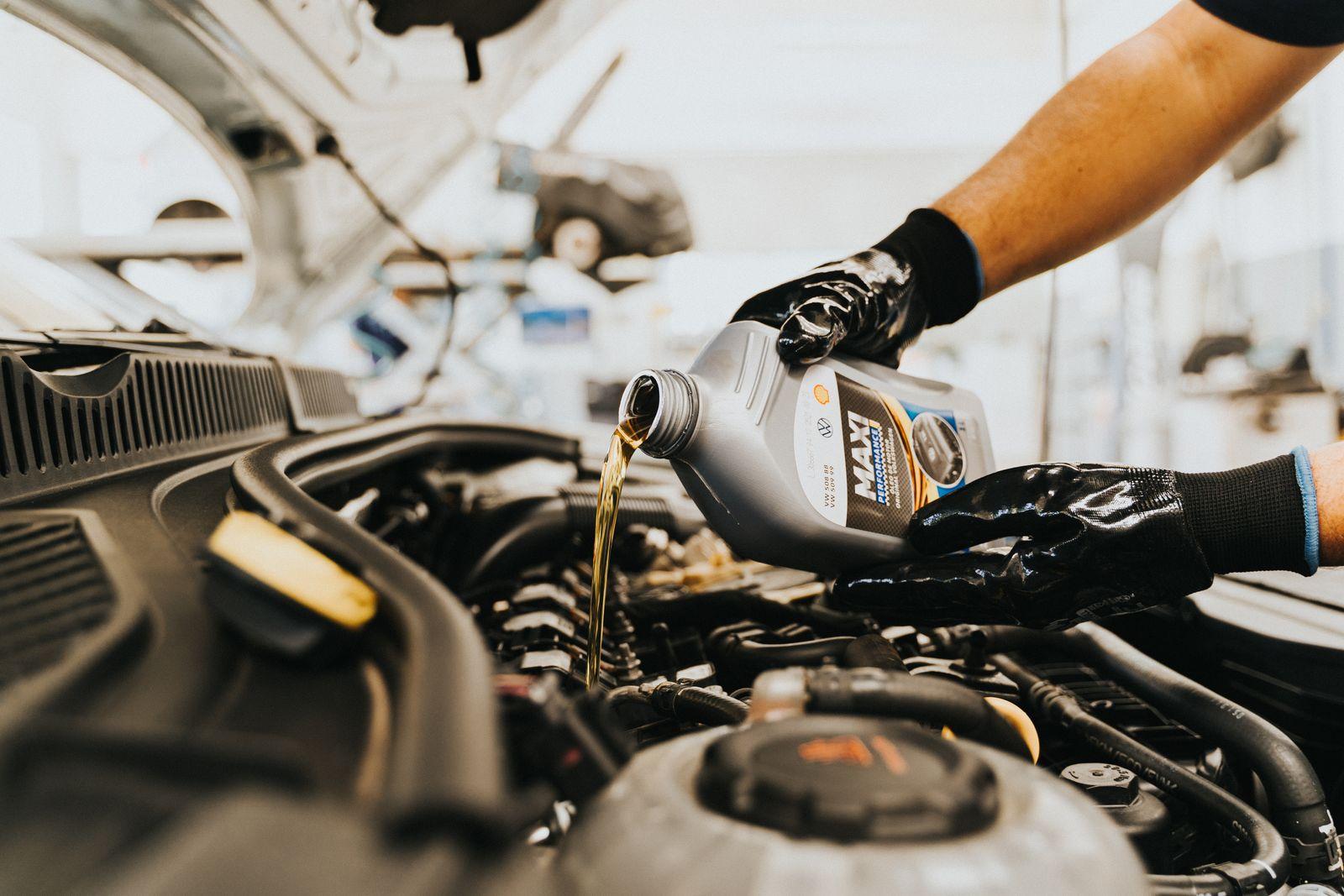
How often to change oil depends on your car's maintenance schedule. Most newer cars on full synthetic need it every 5,000 to 10,000 miles or every 6 to 12 months, whichever comes first. The owner's manual sets the exact number. San Francisco driving can put you on the shorter "severe" schedule, but not every city driver qualifies, and the rules are narrower than most websites suggest.
Here's how we read the manufacturer schedules for SF drivers, what each kind of oil changes, and what an oil change in San Francisco costs.
How often should you change your oil?
Follow the interval in your owner's manual. For most newer cars on full synthetic, that's about 10,000 miles or 12 months on the normal schedule. It drops to 5,000 miles or 6 months on the severe schedule. Older cars on conventional oil usually run closer to 5,000 miles. Whichever limit you hit first is the one that counts.
| Oil or vehicle type | Normal schedule | Severe schedule | Source |
|---|---|---|---|
| Newer Toyota on synthetic (2026 Camry, Tacoma) | 10,000 mi or 12 months | 5,000 mi or 6 months | Toyota 2026 Camry guide |
| Full synthetic, general guidance | 10,000 to 15,000 mi | Per your manual | AAA |
| Synthetic blend | About 6,000 mi | Per your manual | AAA |
| Conventional oil (mostly older cars) | About 5,000 mi | Per your manual | AAA |
| Cars with an oil life monitor | When the monitor says so | The monitor shortens it for you | Owner's manual |
| Any car, very low mileage | At least once a year | Every 6 months | AAA; Toyota |
Treat this table as a guide, not a substitute for your manual. If you've lost the manual, bring the car or the VIN and we'll look up the exact schedule for your engine.
Does city driving in San Francisco count as severe service?
Sometimes. Manufacturers define severe service more narrowly than most oil-change ads. Long stretches of idling and low-speed driving, like rideshare or delivery work, can qualify. Short trips mainly count when it's below freezing, which San Francisco almost never sees. Most mixed-use SF commuters can follow the normal schedule.
Take Toyota as an example, because its guides spell this out. The 2026 Camry and 2026 Tacoma guides list these "special operating conditions":
- Mostly dirt or dusty roads. In SF terms, think regular runs up unpaved fire roads or trailhead lots, not city streets.
- Towing, a car-top carrier or heavy loads. A roof box that stays on all year can count; one Tahoe weekend doesn't.
- Repeated trips under 5 miles below 32°F. NOAA notes that freezing temperatures are "extremely rare" in San Francisco, so this one rarely applies here.
- Extensive idling or low-speed driving over long distances, such as taxi or door-to-door delivery use (listed in the Tacoma guide).
Toyota adds that you only need the extra service if the majority of your driving happens under those conditions. Occasional traffic doesn't move you to the severe schedule.
Other brands draw the line differently. AAA's general advice counts stop-and-go driving and trips of 5 miles or less as severe. That's why your own manual, not a generic list, is the tiebreaker.
You're probably on the severe schedule if:
- You drive for rideshare or delivery
- Most of your miles are crawling through SoMa or the Mission with long idles
- You tow, or regularly carry a roof box or heavy loads
- You often drive dirt roads to trailheads or job sites
Short trips still matter, even without freezing weather. An engine that never fully warms up doesn't burn off moisture and fuel that collect in the oil. For short-hop SF cars, that's a good reason to never skip the 12-month change, even if the mileage is low.
How often to change oil if you barely drive
Change it at least once a year, even if you've only driven 2,000 or 3,000 miles. If you're on a severe schedule, make it every 6 months. Oil ages in the engine whether you drive or not, so the time limit matters as much as the mileage.
AAA says to change the oil once a year even if you haven't reached the mileage. Toyota's current guides say the same: replace the oil and filter after 12 months, even if the maintenance reminder hasn't come on.
This is the rule that catches a lot of San Francisco owners. If you work from home, take Muni most days or park on the street for a week at a time, you may drive under 5,000 miles a year. For you, the calendar sets the schedule, not the odometer.
Synthetic vs conventional oil: does it change the interval?
Yes. Synthetic oil resists breaking down for longer, which is why synthetic schedules often run about 10,000 miles or more. But the bigger rule is to use the oil your manual specifies. Many newer engines call for thin grades like 0W-20 or 0W-16, so the choice is often already made for you.
In June 2017, AAA tested synthetic and conventional oils across eight industry-standard tests. Synthetic outperformed conventional by an average of nearly 50 percent. AAA said synthetic was especially helpful for turbocharged engines and cars in stop-and-go traffic. At 2017 prices, AAA estimated the switch cost about $64 more a year. Treat that figure as history, since oil and labor cost more now.
| Oil type | Typical use | Typical interval | Relative cost |
|---|---|---|---|
| Conventional | Older cars that specify it | About 5,000 mi | Lowest |
| Synthetic blend | Some trucks and older cars | About 6,000 mi | Middle |
| Full synthetic | Most newer cars, turbos, many European cars | About 10,000 mi or more, per the manual | Highest |
If your manual allows either, synthetic costs more per change but holds up better in hard city driving. It still doesn't let you stretch past the manual's interval.
Can you trust your oil life monitor?
Yes, for most cars. The monitor calculates oil life from how the engine is actually used, so it already shortens the interval for hard city driving. Just remember two things: it doesn't measure how much oil is in the engine, and it only works if someone resets it after a real oil change.
Honda's manuals, for example, say the Maintenance Minder calculates remaining oil life "based on the engine operating conditions." So "15% oil life" means 15% of the change interval is left. It does not mean 15% of your oil is left.

Some engines burn or leak a little oil between changes. That's why Toyota tells owners to check the oil level once a month. It takes a couple of minutes on level ground; your manual shows where the dipstick is and how to read it.
Oil change intervals for hybrids, turbos and European cars
These cars follow the same rule: use the manual's oil and the manual's interval. The details differ in a few ways.
- Hybrids: the gas engine runs less, but the time limit still applies. Toyota's 2026 Camry, which is sold only as a hybrid, still lists 10,000 miles or 12 months.
- Turbocharged engines: the turbo spins on a thin film of oil and runs very hot. On a city-driven turbo car, we'd stay at or inside the manual's interval rather than stretch it.
- European cars: many BMW, Audi, Mercedes and VW manuals list long intervals that assume a specific manufacturer-approved oil. The approval code on the bottle matters as much as the viscosity. The wrong oil can shorten engine life even when the mileage looks fine.
Signs you're overdue for an oil change
If you can't remember your last oil change, check the sticker or your records. It's time for a change if:
- The oil change or maintenance light is on
- The oil on the dipstick is low, very dark or gritty
- It's been more than 12 months since the last change
What an oil change costs in San Francisco (and what skipping one costs)
At a Bay Area independent shop, a full-synthetic oil change on a typical Japanese or American car runs roughly $100 to $160. European cars that need a specific approved oil cost more. Exact cost depends on the car; you'll get a quote before we start.
| Service | SF Bay Area independent shop (estimate) | National reference |
|---|---|---|
| Conventional or synthetic blend oil change | $70 to $110 | AAA: $38 average for conventional in 2017 (dated) |
| Full synthetic, most Japanese and US cars | $100 to $160 | RepairPal: $160 to $188 nationally (2026) |
| Full synthetic, European car with approved oil | $150 to $250 | Varies widely by engine |
Dealers typically charge more for labor. Whatever you pay, keep the receipt. Using an independent shop doesn't void your new-car warranty, as we explain in dealer vs independent mechanic.
Skipping changes costs far more. Toyota's own guide warns that missed oil changes can cause oil starvation or oil gelling, which can mean costly repairs that aren't covered by the new-car warranty. If the engine is ruined, Kelley Blue Book puts a professional rebuild at about $3,500 to $6,000. A remanufactured engine for a mainstream car runs about $5,000 to $9,000 before installation. Those are national figures, not quotes for your car.
Not every skipped change ends in a new engine. But sludge, worn timing chain parts and turbo damage are all far pricier than a year of oil changes.
An oil change is also a good time for a quick look at the rest of the car. While it's up, we can measure your brake pads (here's how to tell when they're due), check tires and top off fluids. If you're due for more than oil, we can roll it into your scheduled maintenance visit. You can book an oil change online any time.
Which oil schedule fits your SF driving
Use the oil and the interval in your owner's manual. For most newer cars on synthetic, that's about 10,000 miles or 12 months. Rideshare, delivery, towing and dirt-road driving can cut it to 5,000 miles or 6 months. If you barely drive, change it at least once a year. Check the dipstick once a month, and never ignore a red oil pressure light.
Frequently Asked Questions
Is the 3,000-mile oil change a myth?
For most modern cars, yes. Current manufacturer schedules for newer cars on synthetic oil commonly run about 10,000 miles or 12 months, and around 5,000 miles on a severe schedule. Some older cars on conventional oil did call for shorter intervals, so check the manual for your car.
Is it OK to go 10,000 miles on synthetic oil?
Yes, if your owner's manual lists 10,000 miles and your driving fits the normal schedule. Change it at 12 months if that comes first, and check the level monthly in between. If you tow, drive rideshare or delivery, or use dirt roads a lot, follow the severe interval instead.
How often should I change my oil if I only drive in the city?
Most San Francisco commuters can follow the normal schedule in their manual, because manufacturers define severe service narrowly. If much of your driving is long idling or low-speed work, like rideshare or delivery, use the severe interval, often 5,000 miles or 6 months. Short trips are another reason never to skip the yearly change.
Should the oil filter be changed every time?
Yes, in almost all cases. Manufacturer schedules such as Toyota's call for replacing the oil and the filter together at every change. A new filter is cheap, and an old one holds the dirt the old oil was carrying.
Does an independent shop oil change void my warranty?
No. The FTC says it's illegal for a dealer to deny warranty coverage because routine maintenance was done by someone else. Use the oil grade and approval your manual specifies, and keep every receipt so you can show the car was maintained on schedule.
Andy Morales
Owner & ASE-Certified Master Technician, 415 Mechanix
Andy has worked on cars for more than 20 years and founded 415 Mechanix in Potrero Hill in 2018. He's an ASE-certified Master Technician who would rather explain a repair than upsell one.
Need Oil Change?
Book online or call us. We're on 25th Street in Potrero Hill, and we explain every repair and quote it before we start.
Learn about our oil change service →